
Department Of Botany
About the Department
The Department of Botany at Dibru College was established in 1974 with just two dedicated faculty members, Late Dr. Lalit Goswami and Late Sri. Birendra Prasad Baruah marking the beginning of a long and fruitful academic journey. In its early years, the department laid a strong foundation for plant sciences education in the region, focusing on both theoretical knowledge and practical skills. Over time, it expanded in terms of faculty strength, infrastructure, and academic scope, keeping pace with advancements in botanical research and pedagogy. The department offers undergraduate courses in Botany under the curriculum prescribed by Dibrugarh University, complemented by laboratory-based learning and field studies. It has also been actively involved in co-curricular activities such as environmental awareness programmes, student research projects etc. With a legacy spanning over five decades, the Department of Botany continues to uphold its commitment to academic excellence, scientific inquiry, and environmental stewardship, nurturing generations of students with a passion for plant sciences. Over the years many students have passed with excellent results in their B.Sc degree and later excelled in various fields like academics, administration, law, business and other professions. Currently the Department is leaded by one Associate Professor, Dr. Dilip Kalita and three Assistant Professors, Sri Pranab Paul, Dr. Viveeyan Saikia and Mrs. Bristy Borgohain, and two Laboratory Bearers Sri Lalit Sonowal and UrmilaSahu. The retired Professors who have served this prestigious Department in all these years were Mrs. Bandana Das, Mrs. Ajanta Dutta, Mrs. Rupjyoti Borah and Mrs Anjana Saikia Baruah.
2023 – A total of four (4) students got selection for pursuing M.Sc. in Physics, one each at Assam University Silchar, Dibrugarh University, Dibrugarh, Jorhat Institute of Science and Technology and Tezpur University, Tezpur.
2024 – A total of four (4) students got selection for pursuing M.Sc. in Physics, one each at Dibrugarh University, Dibrugarh, Jorhat Institute of Science and Technology, Hyderabad Central University and DHSK College, Dibrugarh.
2025 – A total of three (3) students has got selected for pursuing M.Sc. in Physics, all at Dibrugarh University, Dibrugarh.
Faculty



Courses and Syllabus
Dibrugarh University UG syllabus of Botany is designed as per the guidelines of National Education Policy-2020. This Four Year Under Graduate Programme (FYUGP) in Botany consists of Major (Core) disciplines, Minor disciplines, Multi Disciplinary Generic Elective Courses (GE), Ability Enhancement Courses (AEC), Value Added Courses (VAC), Skill Enhancement Courses (SEC), Environmental Education (EE), YOGA, Community Engagement like NCC/NSS, Digital and Technological solutions, Internship, Field Studies, Research Ethics, Research Projects and Discipline Specific electives (DSE) to acquaint the students with balanced knowledge on the plant resources, environment, contemporary issues and entrepreneurship.
The Bachelor of Science in Botany of Dibrugarh University under NEP-2020 is a programme with multiple exit options. UG certificate, UG Diploma, UG Degree and UG Degree (Honours with Research) in Botany will be awarded to students after successful completion of one, two, three and four years respectively. It is expected that, on successful completion of this four year programme students will be skilled in multidisciplinary aspects for exploration and sustainable utilization of plant/natural resources of NE region of India.
Aims of Four Year Under-Graduate Programme (FYUGP) in Botany:
- To introduce the students with the rich biodiversity of North east India.
- To enable the students to explore the potential of plant resources for human welfare and their use in a sustainable way.
- To develop capabilities of students for critical evaluation of contemporary issues related to environment and nature.
- To generate skilled human resource for biological entrepreneurship.
Programme Educational Objectives (PEOs)
- Formulate strategies to achieve sustainable development in harnessing biological resources.
- Evaluate environmental problems and design innovative solutions.
- Demonstrate an attitude to employ multidisciplinary approaches for problem solving.
Programme Outcomes (POs)
- Develop ideas to assess and inventorize existing biological resources of this region.
- Formulate innovative strategies for conservation of biogenetic resources for human welfare
- To explore and validate ethnobiological knowledge of Northeast India
- To provide solutions for existing societal problems using biological knowledge
- Develop research skills to solve complex biological issues and achieving SDGs
- Execute good communication skills for disseminating knowledge of biological sciences
- To promote the attitude to work as a team appreciating ethical values
Programme Specific Outcomes (PSOs)
- Evaluate the diversity and evolution of organisms
- Analyze the fundamentals of life-sustaining processes
- Design strategies for issues concerning public health and human welfare
- Critically analyze the environmental issues and develop strategies to address them
- Formulate measures to mitigate climate change effects
Link of the syllabus :
Syllabus Link:
Departmental Activities
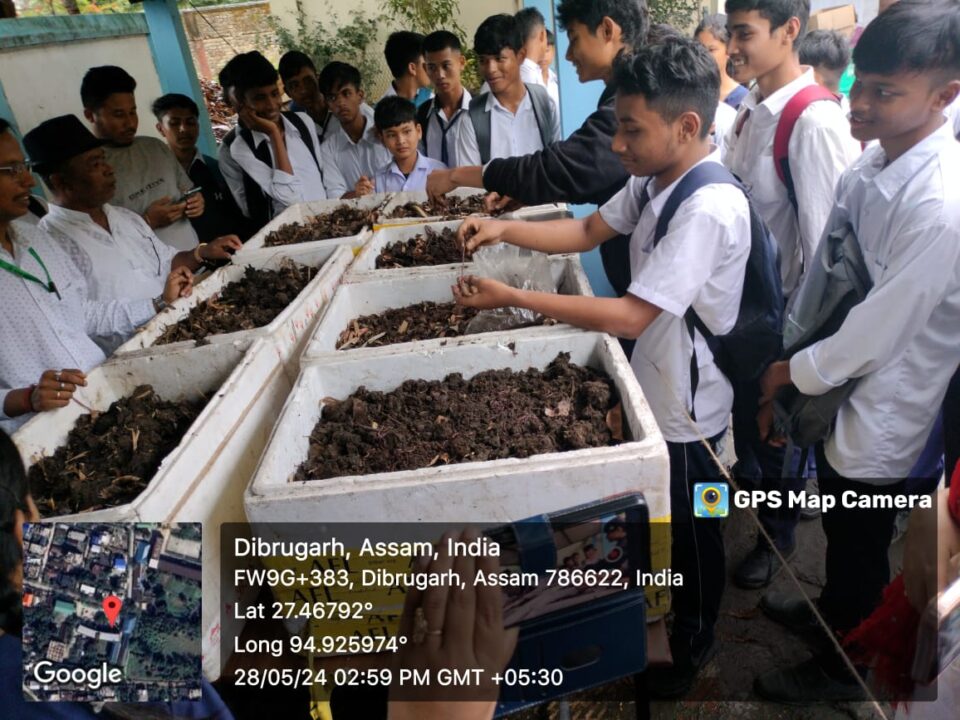
The Department, in collaboration with the Eco Club, regularly organizes activities that promote environmental awareness and sustainable practices. These include practical and hands-on programs such as vermicomposting, where organic waste is converted into nutrient-rich compost with the help of earthworms. This not only reduces waste but also produces natural fertilizer for plants. Another important initiative is rainwater harvesting and solid waste management where methods are demonstrated and implemented to collect and store rainwater for later use as well as to mitigate pollution. This helps in conserving water and addressing water scarcity issues, and conserves our environment through scientific waste management and brings awareness in the society.
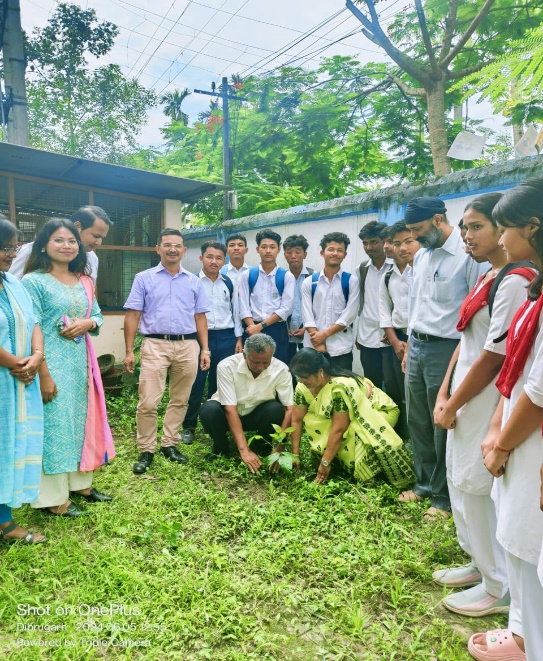
The department and Eco Club also celebrate World Environment Day on 5th of June every year through tree plantation drives, awareness programs, poster-making competitions, and talks by resource persons to encourage students and the community to protect nature.
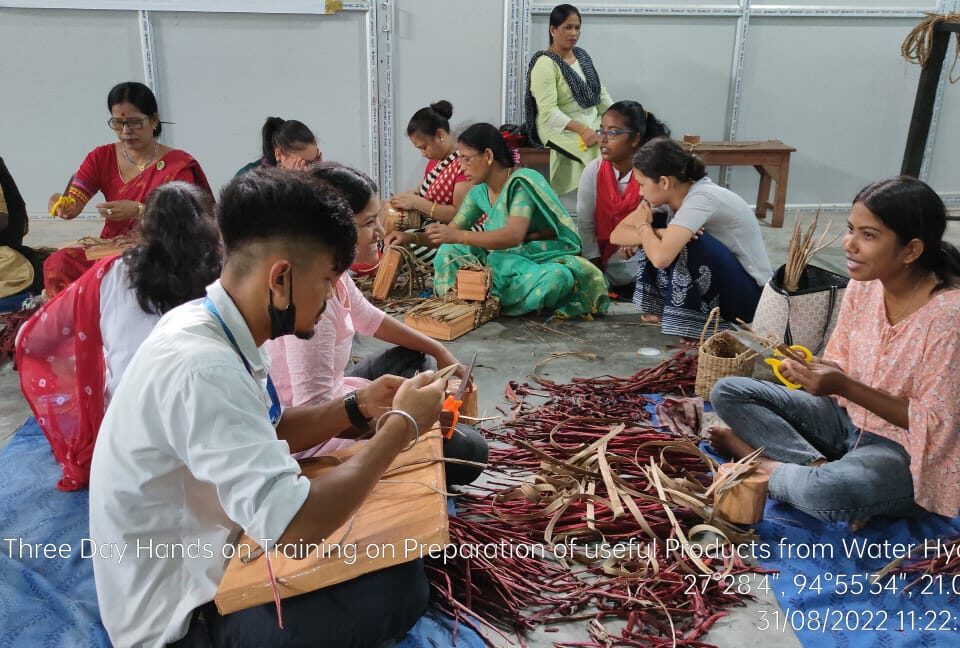
In addition, workshops were conducted on preparing useful products from water hyacinth plants from 29th to 31st August 2022. Since water hyacinth is an invasive weed that harms aquatic ecosystems, training participants to make eco-friendly items such as baskets, mats, and decorative pieces from its stems not only helps in cleaning water bodies but also promotes sustainable livelihood opportunities.
Through these collaborative activities, the department fosters environmental responsibility among students and inspires them to adopt eco-friendly practices in daily life
Publications

- Pranab Paul (2023). Efficacy of fungicide and Botanical Extracts against Alternaria brassicicola causing leaf spot of Cabbage (Brassica oleracea var capitata L.), Asian Journal of Biological and Life Sciences. ISSN No. 2278-5957, ajbls.com/article/2023/12/3/493-498
- Pranab Paul, Bristy Borgohain and Bijoy Neog (2025). A Review on the Antioxidant and nutritional Potential of Indigenous Lemons in Northeast India, Indian Journal of Natural Sciences. ISSN No. 0976-0997.
Books
- Health and wellness by Pranab Paul, ISBN 978-81-96174-21-7(year of publication: August 2023)
- Genetics and Evolutionary Biology by Pranab Paul, ISBN 978-93-48070-07-4 (year of publication: January 2025)

- Viveeyan Saikia, et al. (2023). Prediction of ACE-inhibitory and antioxidant peptides from storage proteins of edible seeds and nuts using in silico approaches, Sustainable Food Proteins. ISSN No. 2771-9693, https://aocs.onlinelibrary.wiley.com/doi/full/10.1002/sfp2.1013

- Bristy Borgohain (2023). The genus Elaeagnus as a potential source of antioxidant lycopene, an anti-cancer agent: A review, Research Journal of Agricultural Sciences. ISSN No. 0976-1675, http://rjas.org/Article/DownloadFile/4410
- Bristy Borgohain (2023). Quantification of 2-acetyl-1-pyrroline in joha rice and it’s correlation with agro-morphological characters with special reference to upper Brahmaputra valley, Assam, India, Flora and Fauna. ISSN No. 2456–9364. http://floraandfona.org.in/Uploaded%20Pdf/291/03-10.pdf
- Bristy Borgohain (2023). Distribution of volatile compounds of traditional aromatic Joha rice (Oryza sativa L.) of upper Assam, India, Thai Journal of Agricultural Science. ISSN No. 2697-4762, https://li01.tci-thaijo.org/index.php/TJAS/article/view/258862
- Pranab Paul, Bristy Borgohain and Bijoy Neog (2025). A Review on the Antioxidant and nutritional Potential of Indigenous Lemons in Northeast India, Indian Journal of Natural Sciences. ISSN No. 0976-0997.
Chapters
1.Borgohain, B., Neog, B. and Saikia, P. (2021). Assessment of genetic diversity among four epiphytic orchids ‘Cymbidium species’ from Sikkim using RAPD markers. In Ed. Sonowal, J., Phangchopi, U. and Rahman, S. Current Biological Research: 45-53 ISBN No: 978-93-5566-144-9
2.Borgohain, B., Gogoi, P. and Saikia, P. (2021). Scenerio of Indigenous Rice Germplasm and its Heritage in Assam- A Review. In Ed. Saikia, S., Chutia, N. and Gogoi, Y. Society Economy and Politics of North East India: 117-124 ISBN No: 978-93-90919-68-0
3.Gogoi, P., Borgohain, B. and Saikia, P. (2021). An Overview of the Impact of Global Climatic Change on Ecosystem and Biodiversity. In Ed. Islam, N., Haque, M.J., Ojha, D. and Miah, C. Wisdom of the Scientific Research, 2: 13-18 ISBN No: 9783964923806
1.Medicinal Botany by Dr. Dilip Kalita, ISBN 978-81-977845-8-3 (year of publication: August, 2024)
2.Mushroom Culture Technology by Dr. Dilip Kalita, ISBN 978-81-977845-3-8 (year of publication: August, 2024)
3.Biofertilizer by Dr. Dilip Kalita, ISBN 978-81-977845-3-8(year of publication:February, 2025)
4.Health and wellness by Dr. Dilip Kalita (year of publication: August,2025)
5.Understanding India by Dr. Dilip Kalita (year of publication: August,2025)