Department Of Computer Science
About the Department
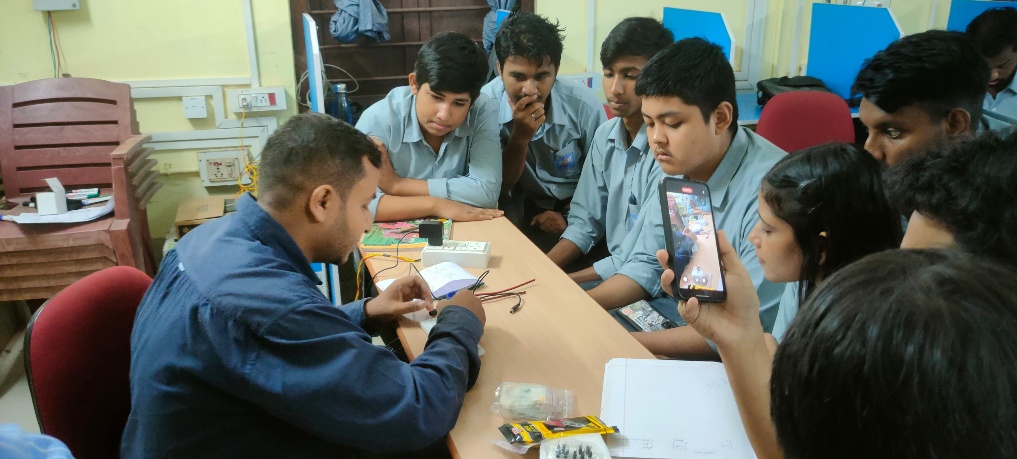
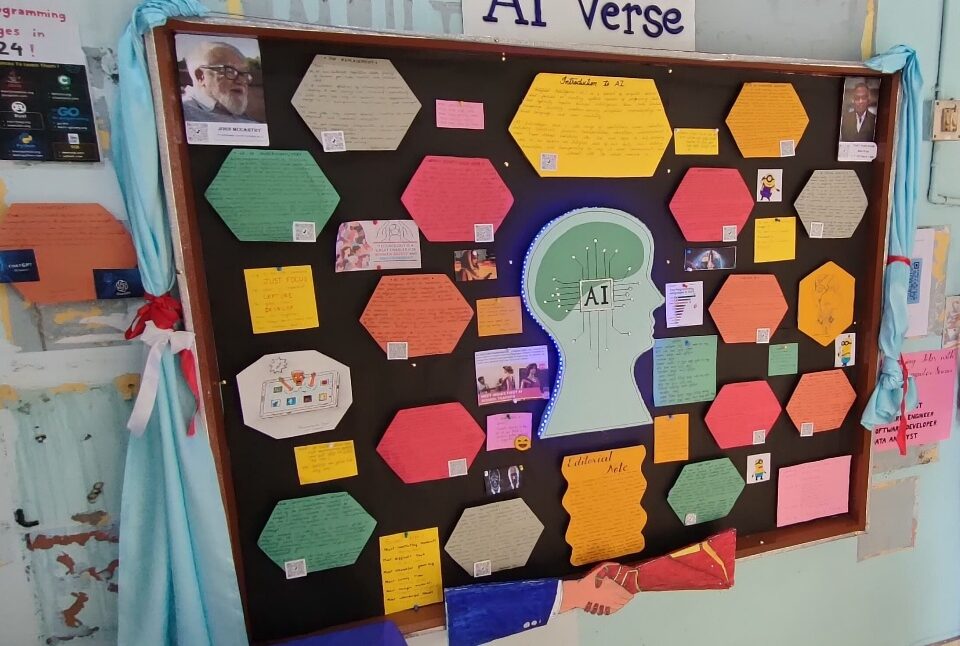
The Department of Computer Science at Dibru College, Dibrugarh, affiliated with Dibrugarh University, is a rapidly developing academic unit established in 1996 under the sponsorship of the University Grants Commission (UGC). Initially, the department set up a Computer Centre with the objective of fostering computer literacy among faculty members, students, and staff. Academic activities commenced with the introduction of Computer Science at the Higher Secondary level through the CSCA program, which was subsequently expanded to include undergraduate Non-Honours courses. In 2024, the department achieved a significant milestone by launching the Bachelor of Computer Applications (BCA) program, followed by the introduction of the Bachelor of Science in Computer Science (Major) in 2025. Alongside its academic advancement, the department has maintained active participation in co-curricular activities, earning recognition twice in the Wall Magazine Competition. Furthermore, a Memorandum of Understanding (MoU) has been signed with NIELIT, enabling the department to offer a range of skill development and upgradation courses through this collaboration.
Faculty





Courses and Syllabus
Programmes and Curriculum:
The Department currently offers the following undergraduate programmes:
- Bachelor of Computer Applications (B.C.A.)
- Bachelor of Science (B.Sc.) in Computer Science (Honors)
These programmes are designed to provide a strong foundation in theoretical and applied aspects of computer science, aligned with the curriculum prescribed by Dibrugarh University.
Number of Students in Bachelor of Computer Application (B.C.A):
- 1st Semester Students: 26
- 3rd Semester Students: 23
Number of Students in Bachelor of Science (B.Sc) in Computer Science (Honors):
- 1 st Semester Students: 26
Syllabus
The syllabus can easily be downloaded from Dibrugarh University Website.
Publications
 Journals:
- Ahmed, M. A., Choudhury, R. D., Sarma, S. K., Borbora, K. A., Bhuyan, Manash P., & Barman, U. (2024). Hybrid deep ensemble for fine-grained race estimation. Multimedia Tools and Applications, 1–24. doi:10.1007/s11042-024-19950-x
- Sarma, P., Bhuyan, Manash Pratim, Kalita, C., & Upadhyaya, V. (2023). A model to validate different inflections of assamese verbs. Recent Patents on Engineering, 19(2), 13–25. doi:10.2174/1872212118666230912154736
- Bhuyan, M. P., & Sarma, S. K. (2020). Generation of missing words in assamese text using n-gram based model. J. of Phy.: Conf. Ser., IOP Science, 1706, 1–9. doi:10.1088/1742-6596/1706/1/012166
- Kalita, S., Sarma, S. K., Bhuyan, Manash P., & Deka, V. (2020). Event detection in assamese text using conditional random field. Journal of Advanced Research in Dynamical and Control Systems presents peer-reviewed survey and original research articles., 12, 1943–023X. Retrieved from https://www.jardcs.org/abstract.php?id=3705
- Bhuyan, M. P., & Sarma, S. K. (2019a). A higher-order n-gram model to enhance automatic word prediction for assamese sentences containing ambiguous words. Int. J. of Eng. and Adv. Tech., 8, 2278–3075. Retrieved from https://www.ijeat.org/portfolio-item/f8706088619/
- Bhuyan, M. P., & Sarma, S. K. (2019b). A statistical model for automatic error detection and correction of assamese words. Int. J. of Rec. Tech. and Eng., 8, 2277–3878. Retrieved from https://www.ijrte.org/wp-content/uploads/papers/v8i2/B3859078219.pdf
- Bhuyan, M. P., & Sarma, S. K. (2019c). An n-gram based model for predicting of word-formation in assamese language. J. of Inf. and Opt. Sci., Taylor Francis, 40, 2169–0103. Retrieved from https://doi.org/10.1080/02522667.2019.1580883
- Rahman, M., Sarma, P., Bhuyan, M. P., Das, A., & Dutta, D. (2019). Image to speech synthesizer with reference to assamese numerals. Int. J. of Inn. Tech. and Expl. Eng., 9, 2278–3075. Retrieved from https://www.ijitee.org/wp-content/uploads/papers/v9i1/A4435119119.pdf
- Sarma, P., Mitra, M., Bhuyan, M. P., Deka, V., Sarmah, S., & Sarma, S. K. (2019). Automatic vowel recognition from assamese spoken words. Int. J. of Inn. Tech. and Expl. Eng., 8, 2278–3075. Retrieved from https://www.ijitee.org/wp-content/uploads/papers/v8i10/J13010881019.pdf
- 10 Sarmah, S., Bhuyan, M. P., Deka, V., Rahman, M., Sarma, P., & Sarma, S. K. (2019). Measuring the performance of multi-core architecture using openmp. Int. J. of Sci. Tech. Res., 8, 2277–8616. Retrieved from http://www.ijstr.org/final-print/oct2019/Measuring-The-Performance-Of-Multi-coreArchitecture-Using-Openmp.pdf
Conference Proceedings
- Talukdar, B. K., Chandra Deka, B., & Bhuyan, Manash Pratim. (2021). Reliability analysis of electric vehicle integrated distribution network. In 2021 international conference on computational performance evaluation (compe) (pp. 858–862). doi:10.1109/ComPE53109.2021.9751918
- Bhuyan, M. P., Sarma, S. K., & Rahman, M. (2020). Natural language processing based stochastic model for the correctness of assamese sentences. In 2020 5th international conference on communication and electronics systems (icces) (pp. 1179–1182). doi:10.1109/ICCES48766.2020.9138067
- Deka, R. R., Kalita, S., Bhuyan, M. P., & Sarma, S. K. (2020). A study of various natural language processing works for assamese language. In S. Dawn, V. E. Balas, A. Esposito, & S. Gope (Eds.), Intelligent techniques and applications in science and technology (pp. 128–136). Cham: Springer International Publishing.
- Bhuyan, M. P., & Sarma, S. K. (2019d). Effects of prediction-length on accuracy in automatic assamese word prediction. In 2019 ieee international conference on electrical, computer and communication technologies (icecct) (pp. 1–4). doi:10.1109/ICECCT.2019.8869431
Books and Chapters
- Ahmed, M. A., Choudhury, R. D., Deka, V., Bhuyan, Manash P., & Boruah, P. A. (2022). Deriving soft biometric feature from facial images (V. Skala, T. P. Singh, T. Choudhury, R. Tomar, & M. Abul Bashar, Eds.). Singapore: Springer Nature Singapore.
- 2 Bhuyan, M. P., Sarma, S. K., & Sarma, P. (2021). Context-based clustering of assamese words using n-gram model (T. Sengodan, M. Murugappan, & S. Misra, Eds.). Singapore: Springer Nature Singapore.
- 3 Khanikar, P., Bhuyan, M. P., Baruah, R. R., & Sarma, H. (2015). Experimental analysis on the performance of a new preprocessing method used in data compression (P. K. Bora, S. R. M. Prasanna, K. K. Sarma, & N. Saikia, Eds.). New Delhi: Springer India.
Facilities
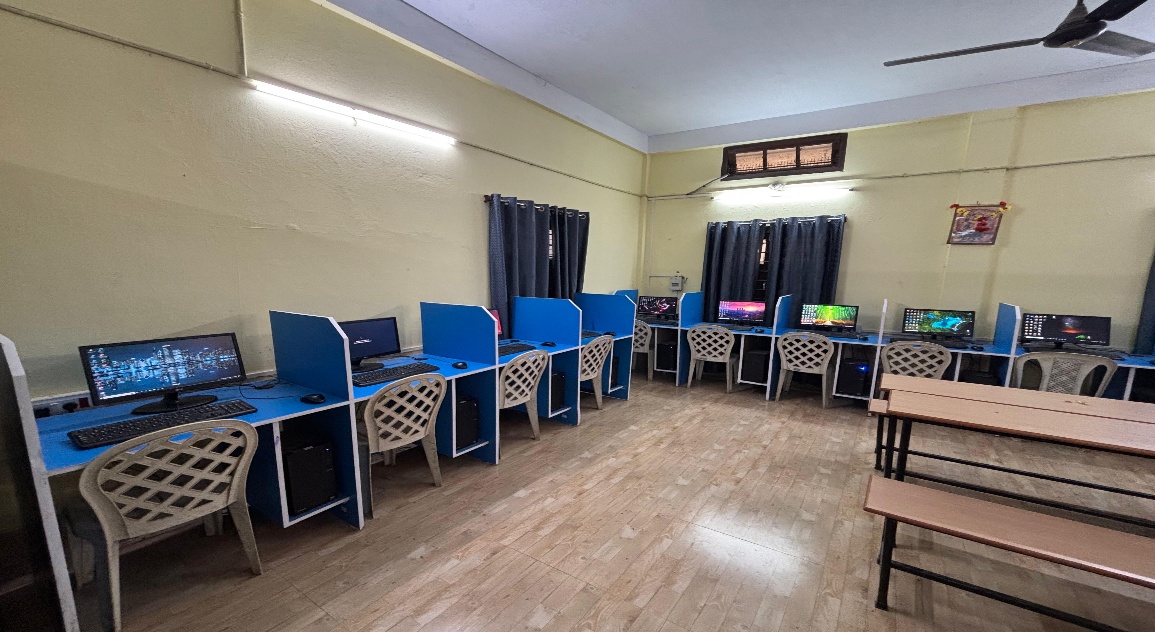
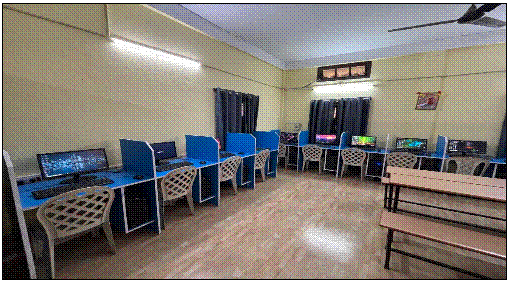
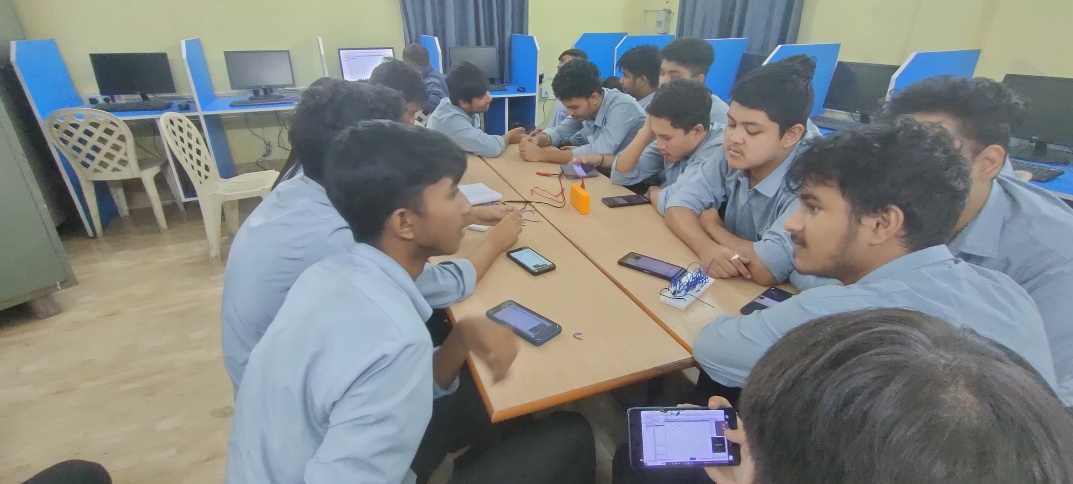
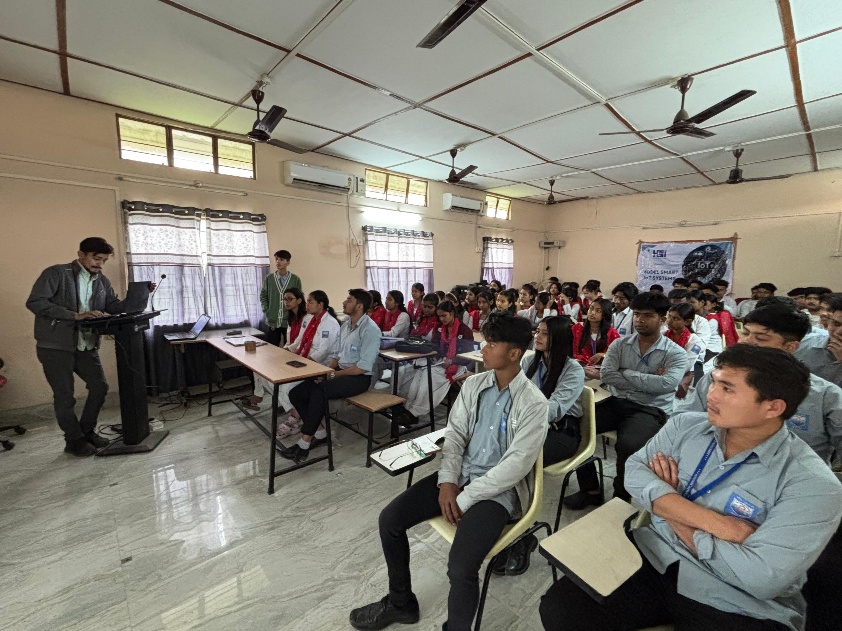
The Department is equipped with 36 computers operating on both Windows and Linux platforms to support diverse learning and development needs. The entire facility is networked with high-speed internet connectivity, accessible through both LAN and Wi-Fi. Additionally, the classrooms are furnished with multimedia projectors to facilitate effective teaching and interactive learning experiences.